

Travel has always required a bit of flexibility. Travel delays happen.
What’s changed is how little margin the system now has for error.
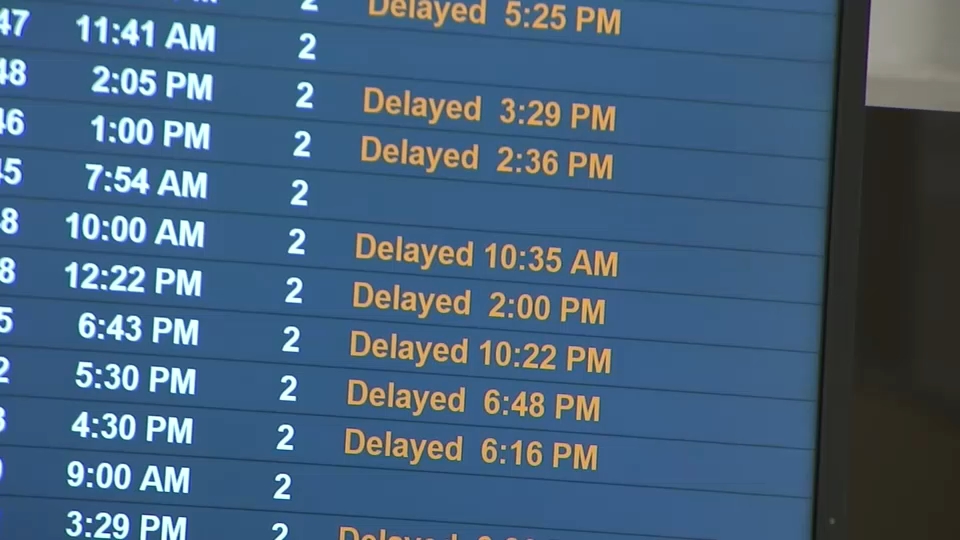
If you’ve noticed more delays, tighter connections failing, or itineraries that look fine on paper but unravel in practice—you’re not imagining it. And more importantly, it’s not random.
It’s structural.

What’s Actually Happening (And Why It Lingers)
Air travel runs on precision—but with very little excess capacity.
Aircraft, crews, and routing are tightly synchronized. When one part is disrupted—whether by staffing shortages, weather, or broader events—the effects don’t just ripple. They compound.
And they don’t resolve overnight.
Even after the initial disruption ends, the system is still recalibrating in real time. What looks stable on a schedule can be anything but behind the scenes.
That’s why travelers continue to see:
- Delays stacking across multiple legs
- Short connections failing more often
- Limited rebooking options
- Misalignment across aircraft and crews
This isn’t a moment. It’s a recovery phase.
:max_bytes(150000):strip_icc()/tl-target-suitcase-tout-df33cc1c864244c9bc33ff206ea6112a.jpg)
Why “Back to Normal” Rarely Means What You Think
One of the biggest misconceptions in travel is that once a headline event ends, operations immediately stabilize.
They don’t—and here’s why.
Airlines aren’t built with excess sitting on standby. There’s no reserve fleet waiting in the wings, and no extra crews available at scale.
So recovery becomes a logistical unwind, not a reset.
Aircraft must be routed back into position.
Crews must be reassigned within strict legal limits.
Schedules must be adjusted to reflect what’s actually possible—not what was originally planned.
During this phase, everything may look intact on paper.
But in practice, itineraries are operating with far less margin for error.
That’s why even small disruptions can have outsized effects.

Where Travelers Are Most Exposed
Not all itineraries carry the same level of risk.
The ones most likely to break down tend to include:
- Tight connections, especially through major hub airports
- Last flights of the day, where recovery options are limited
- Multi-stop itineraries increase the number of failure points
- Checked luggage, which adds complexity when rerouting becomes necessary
None of these is inherently wrong.
But in a strained system, they leave very little room for error.

How Smart Travelers Reduce Their Risk
Experienced travelers don’t assume everything will go perfectly.
They plan for what’s likely, not what’s ideal.
That looks like:
- Choosing routing that prioritizes reliability over convenience
- Building in buffer time where it actually matters
- Keeping key parts of the journey flexible
- Minimizing friction points (especially with baggage and connections)
It also means using the right tools:
- Check real-time airport conditions via the Transportation Security Administration wait time tool:
👉 https://www.tsa.gov/mobile - Review delay data and passenger rights through the U.S. Department of Transportation:
👉 https://www.transportation.gov/airconsumer - Monitor your specific flight directly through your airline’s app (not the airport screens)
Information—and timing—matter more than ever.
Where Professional Planning Changes the Outcome
This is where most DIY travel falls short—not in booking, but in design.
Anyone can select flights.
Fewer people know how to structure an itinerary that holds up under pressure.
Thoughtful travel design accounts for variables most travelers don’t see:
- Which airports handle disruption more efficiently
- What connection windows are realistically viable right now
- When to route direct vs. when a connection is smarter
- Where flexibility actually matters—and where it doesn’t
It also includes contingency thinking:
- What happens if this leg cancels?
- What are the realistic recovery options?
- How quickly can adjustments be made without compromising the trip?
This is exactly the layer of planning I build into every itinerary I design.
👉 If you want to see how that works in practice, you can explore my approach further by contacting me here.

The Bottom Line
Travel is no less worthwhile than it used to be.
But it does require a different approach.
The system is more complex, more constrained, and less forgiving of tight margins. Travelers who recognize that—and plan accordingly—are the ones who continue to move through it smoothly.
The difference isn’t whether something goes wrong.
It’s whether your trip was designed to handle it.
Learn more about our Services or Email us to have a complimentary discovery call to see exactly how extraordinary and professionally planned your next trip can be!


0 Comments